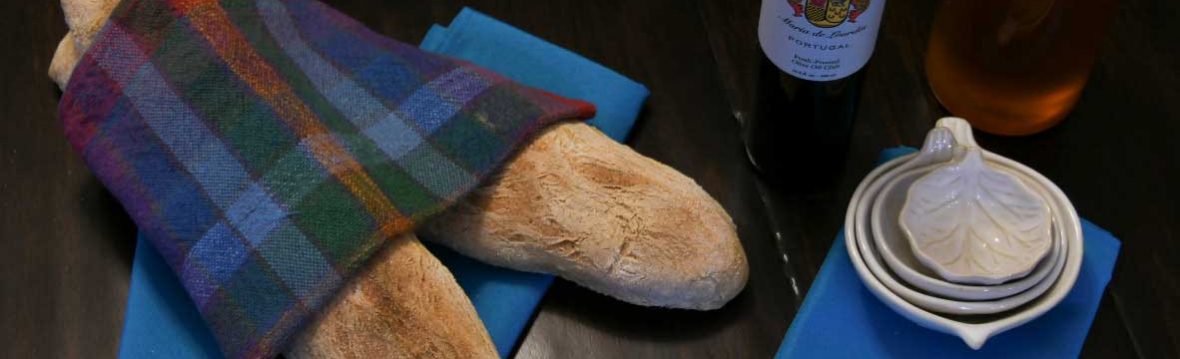

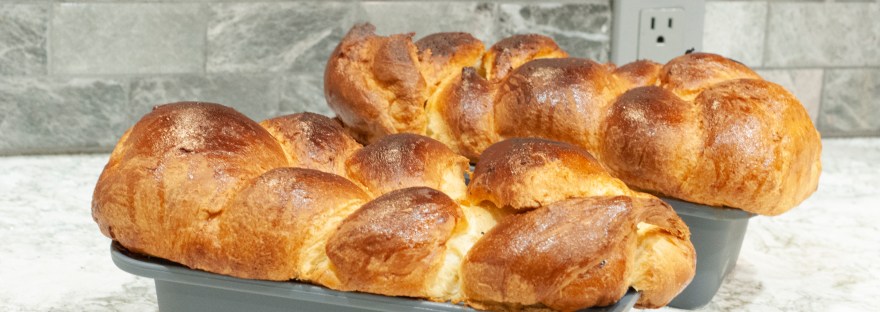
I love the smell of freshly baked bread in the house. One of the most complicated and delicious breads that I’ve made is brioche. The magical ingredient in brioche is BUTTER!!!! And, the key to a good loaf of brioche is a strong gluten development, which means A LOT of time in the mixer kneading.


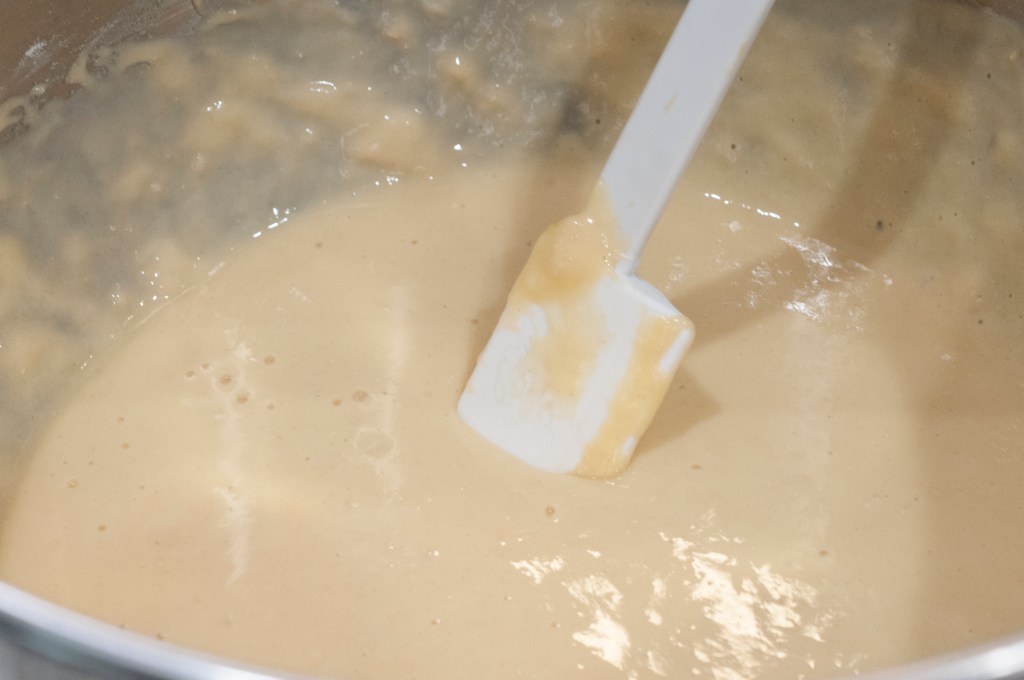
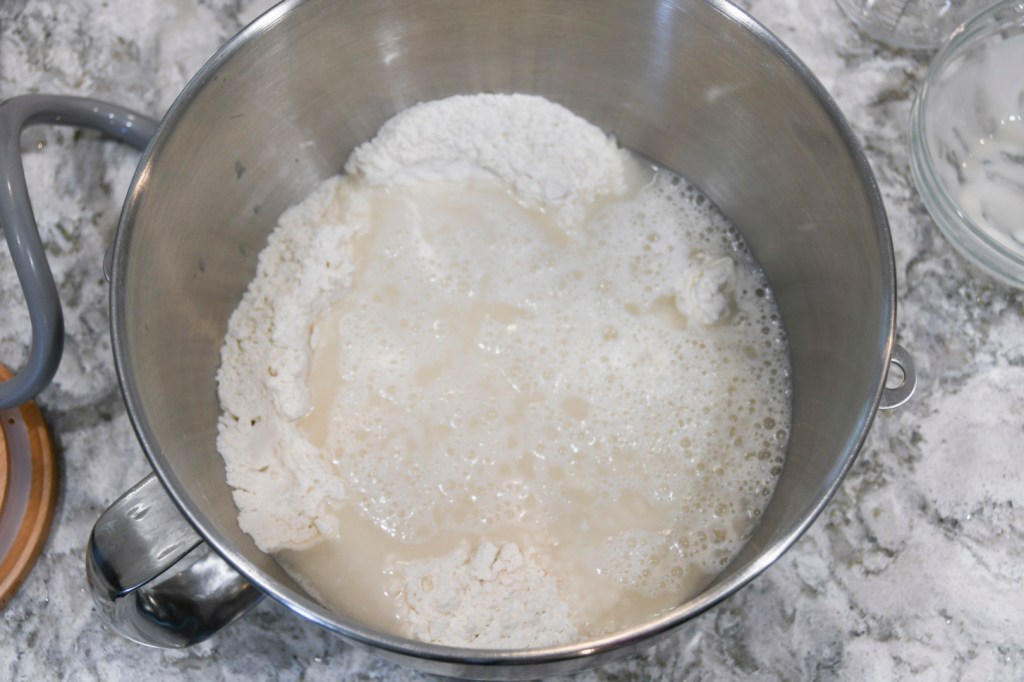
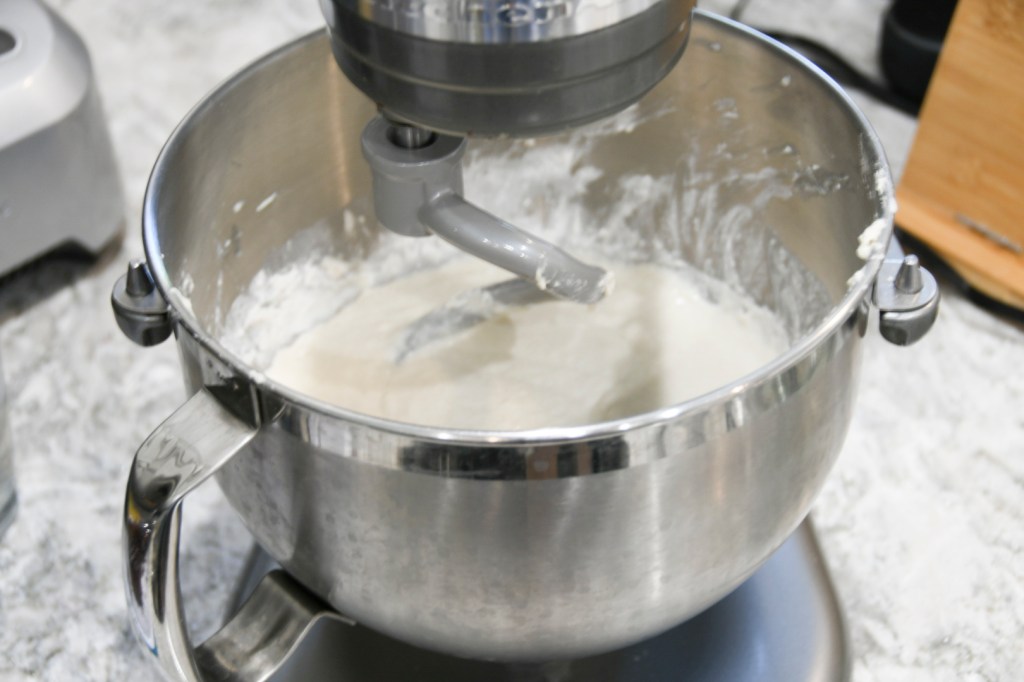
The ingredients are simple: all-purpose flour, butter, eggs, salt, yeast, sugar, and water. And you start by making a sponge, which is a way to give the yeast a head start. Put 3 cups of flour, yeast, water, and eggs in a mixing bowl. Beat on medium speed with the paddle attachment until the batter is smooth. Cover it and let it sit for 45 minutes. The mixture will develop a few bubbles.
Add the remaining 2 cups of flour, the sugar, and salt. Beat until the dough cleans the side of the bowl and becomes shiny and elastic. It will take 8 to 10 minutes.
Now comes the unusual part. While the dough is mixing, flour the countertop and put the butter on top of the flour. Generously sprinkle the top of the butter with flour. Using a rolling pin, pound the butter until it becomes a flat rectangle. Folding it over several times until the butter becomes pliable. It should still be cold. This will make it easier to incorporate the butter into the dough.
After the dough has been kneading for 8-10 minutes, it’s time to test the dough’s gluten development. Pull up a thin piece of dough and stretch it as far as you can before it tears. It should stretch thin enough to see through. This is the window-pane test. If it tears too quickly, knead it for a couple more minutes and repeat the test.
Once the dough passes the window pane test, it’s time to add the butter. While the mixer is on, add the butter to the dough a little at time and beat it until it’s fully incorporated.
Cover the dough and let it rise for one hour. It should be soft and should have risen by a third. Dust the countertop with flour and turn the dough onto it. Fold it over several times. Use a bench knife to scrape up any dough bits that stick to the surface. Place in a greased bowl, cover and refrigerate for 4 to 16 hours.
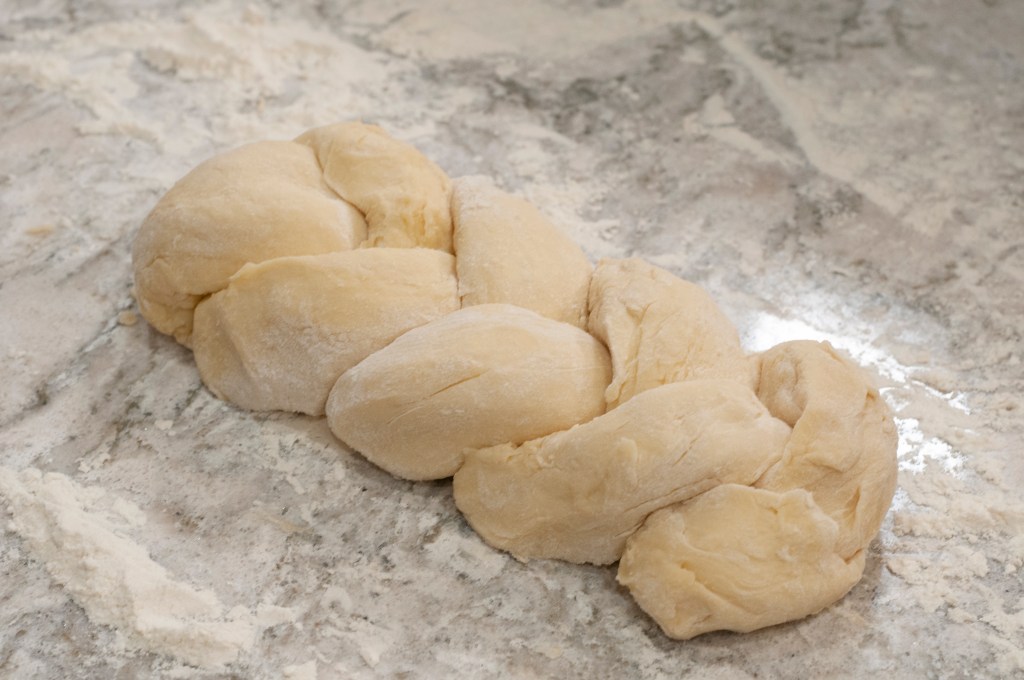
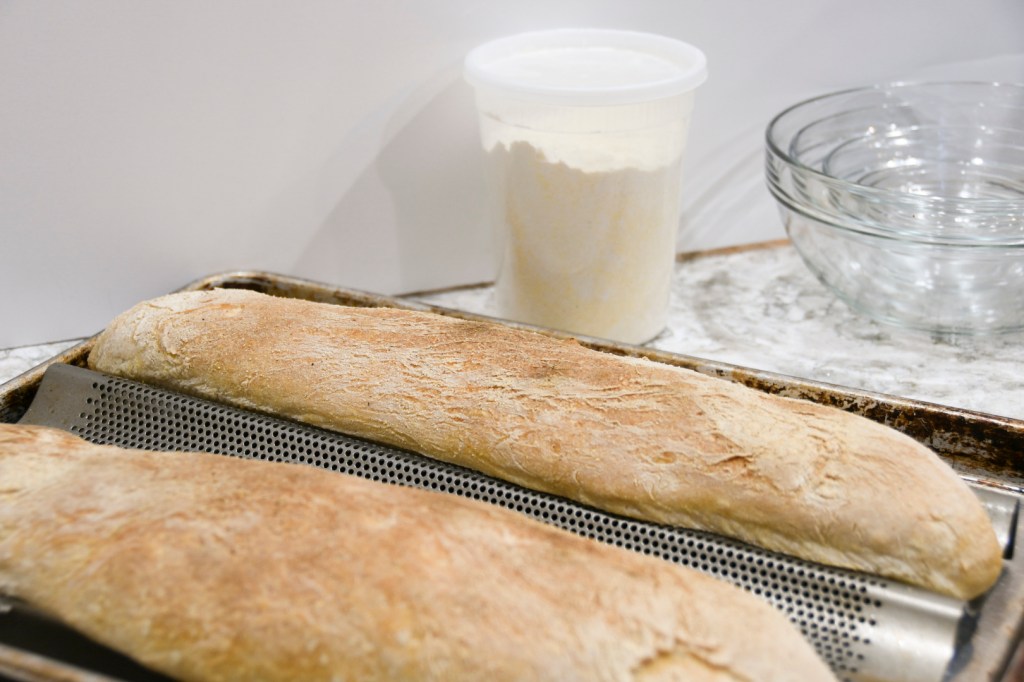
Remove from the refrigerator, divide the loaf into two pieces, and form it into two loafs. You can roll it out flat and then roll it into a loaf shape. This will give you nice long strands for the dough structure. You can also divide each loaf into 3 more pieces, roll them into a long snake-like ribbon, and braid the pieces into a loaf.
Cover the dough lightly and allow it double in size, about 2 ½ to 3 hours. Preheat oven to 375 degrees. Beat the egg yolk with 1 tablespoon of water and brush the exposed surfaces. Bake the brioche for 45-50 minutes or until it’s internal temperature reaches 190 degrees and is golden brown. After 10 minutes, remove the bread from the pan and allow it cool completely.
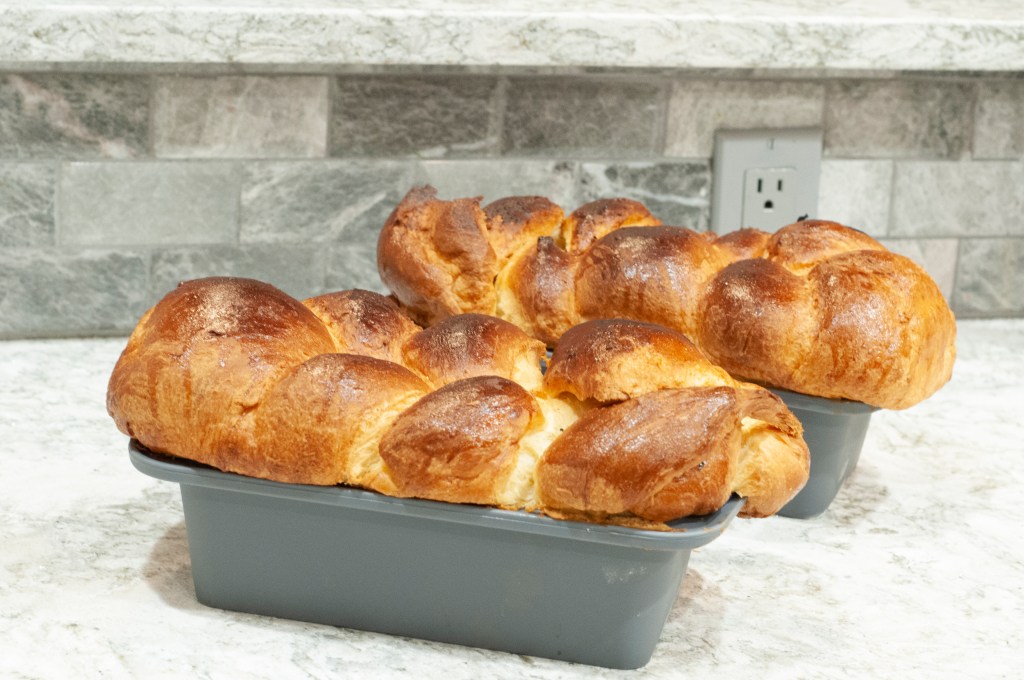
Brioche
From the Kitchen of Lynnae Hymas
Recipe by King Arthur Flour
| Serves: 2 loaves | Prep Time: 30-60 minutes active, 24 hours passive | Cook Time: 45-50 minutes |
INGREDIENTS:
- 5 cups or 21 ounces of all-purpose flour
- 1 tablespoons yeast
- ½ cup or 4 ounces of cool water
- 8 large eggs, plus 1 egg yolk for glaze
- 4 tablespoons sugar
- 1 ½ teaspoon salt
- 2 cups cold unsalted water
INSTRUCTIONS:
Put 3 cups of flour, yeast, water, and eggs in a mixing bowl. Beat on medium speed with the paddle attachment until the batter is smooth. This is a sponge that will give the yeast a head start. Cover it and let it sit for 45 minutes. The mixture will develop a few bubbles.
Add the remaining 2 cups of flour, the sugar, and salt. Beat until the dough cleans the side of the bowl and becomes shiny and elastic. It will take 8 to 10 minutes.
In the meantime, flour the countertop and put the butter down. Sprinkle the top of the butter with flour. Using a rolling pin, pound the butter until it becomes a flat rectangle, folding it over several times until the butter becomes pliable. It should still be cold.
Test the dough’s gluten development by pulling up a thin layer and stretch it as far as you can before it tears. It should stretch thin enough to see through. This is the window-pane test. Add the butter to the dough a little at time and beat it until it’s fully incorporated.
Cover the dough and let it rise for one hour. It should be soft and should have risen by a third. Dust the countertop with flour and turn the dough onto it. Fold it over several times. Use a bench knife to scrape up any dough bits that stick to the surface. Place in a greased bowl, cover and refrigerate for 4 to 16 hours.
Remove from the refrigerator, divide the loaf into two pieces, and form it into two loafs. Cover the dough lightly and allow it double in size, about 2 ½ to 3 hours. Preheat oven to 375 degrees. Beat the egg yolk with 1 tablespoon of water and brush the exposed surfaces. Bake the brioche for 45-50 minutes or until it’s internal temperature reaches 190 degrees and is golden brown. After 10 minutes, remove the bread from the pan and allow it cool completely.







 Hymas Family Favorites